Thursday, September 12, 2013

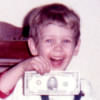
a non-identifying ID card


Over the past 20-years, Janice 'Lokelani' Keihanaikukauakahihuliheekahaunaele has carried two separate IDS - a state ID card and a driver's license.

The driver's license was printed with an abbreviated version of her family name and her first and middle name was completely left off.

However, to counteract this, the Hawaiian Governor's office allowed her special dispensation to accommodate her full name on her state ID, but that expired in May and her problems began when her new one arrived laid out the same as her drivers license.

Her frustrations began when she contacted her local county on Hawaii and asked them what could be done - they suggested she change her last name to make the situation easier on her and them.

a non-identifying ID card.
This might be what they mean by "close enough for government work"


Just think, there are only about 1.3 million people in Hawaii so with a 26 letter alphabet the Hawaiian government could assign a unique 5 letter surname to anyone with a name 6 characters or longer. So, "Dwight D. Eisenhower" could become "Dwight D. Abcde".

If we treat capital letters as distinct from lowercase letters everyone in Hawaii could have a 4 letter surname so "Michelangelo Buonarroti" could become "Michelangelo AcDQ".

Imagine how much ink that would save. The time save by having to type fewer letters! Don't be selfish, those Hawaiian DMV computer hard drives cost money and it just might process a 4 letter name more quickly than a 36 letter name thereby saving someone at the DMV a millionth of a second or so.

Often bureaucrats are more concerned about the impact on bureaucrats than whether a policy actually works, like issuing a card to show a person's ID should actually shows the person's ID as opposed to issuing an ID card that does not show the person's ID. It is easier for them to try to get her to change her name than for the bureaucrats to be inconvenienced.

If only the Hawaii DMV had a database of resident names so they could have planned around these types of issues.

Sunday, September 8, 2013

A chair of note


August Thonet of Gebruder Thonet bent wood chair, 1870
Not necessarily built for comfort
A chair made in 1870 of 2 pieces of solid beech wood by August Thonet of the Austrian furniture company Gebruder Thonet (Brothers Thonet) as a demonstration of their steam wood bending technique.

------------------------

Gebruder Thonet No. 14 bent wood chair, 1859
Thonet's #14 chair
Gebruder Thonet started as a craftsman but embraced mass production. Michael Thonet, the father of the Thonet Brothers and founder of Gebruder Thonet, even built much of his own machinery. In 1859 they introduced the Thonet's #14 chair and by 1900 they had sold 40 million.

pics from the magazine Fine Woodworking #20 (Jan 1980).

Saturday, August 17, 2013

word of the day : callipygian


The word of the day is callipygian : kallos means beauty, puge means buttocks. Aphrodite Kallipygos.

a Callipygian Venus (Naples)
1st or 2nd century BC

a Callipygian Venus (Naples)
1st or 2nd century BC
(second view)


Callipygian Venus by François Barois, 1683-1686 (2 views)


Monday, August 12, 2013

Friday, August 9, 2013

Book Notes : nasty, misogynistic, fearful contempt

photo of page 81 of the book the Essential Hieronymous Bosch
page from The Essential Hieronymus Bosch
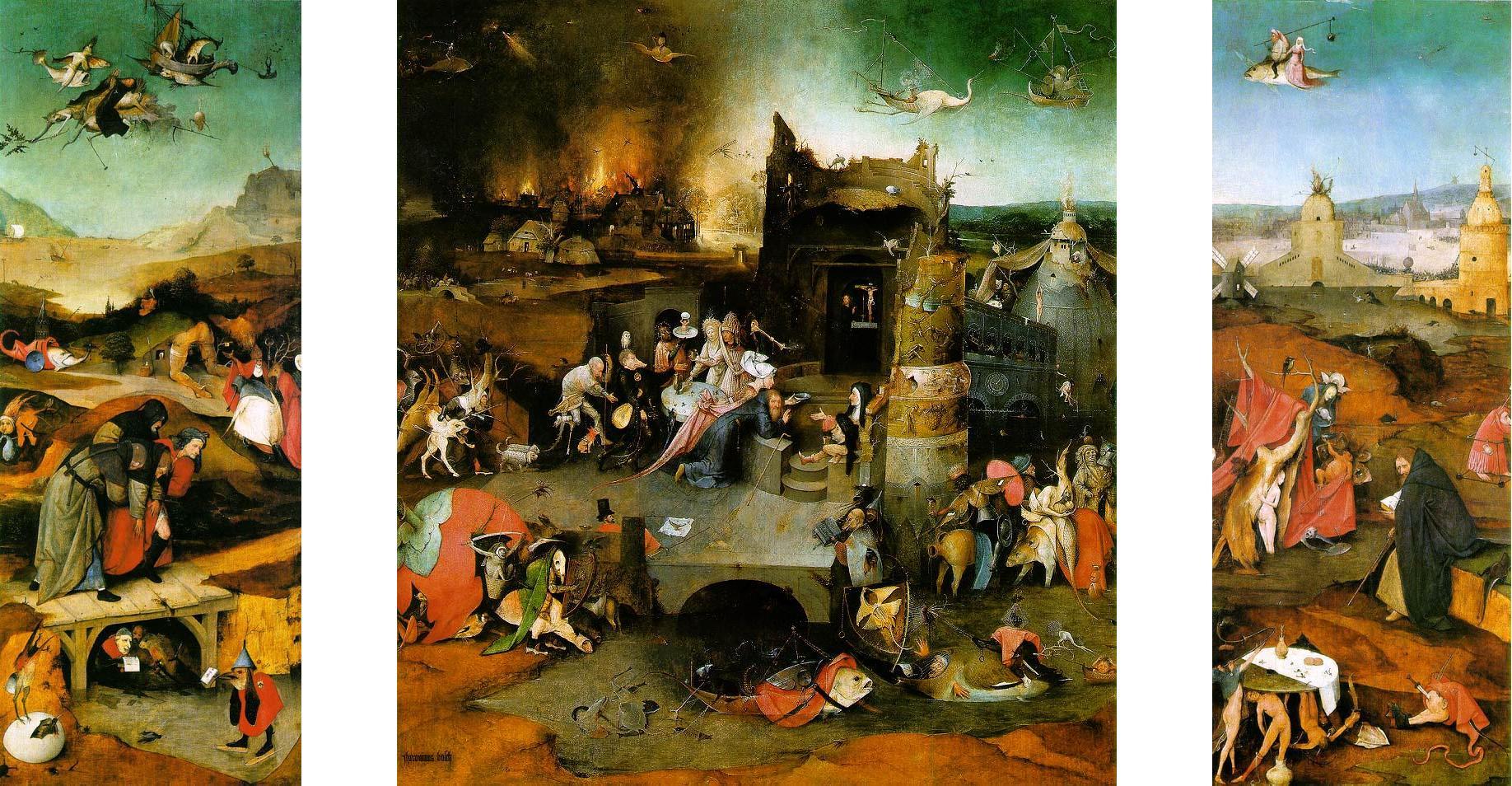
from the little book The Essential Hieronymus Bosch by W. John Campbell (2000) p81 about the painting the Temptations of Saint Anthony :

Unlike the abstract theme of salvation through prayer in the middle panel, the right wing – like the left – is a narrative, the temptation of the saint by a beautiful girl. This misogynist episode – a nasty medieval expression of fearful contempt of women – pits the saint and his Bible against the allure of a slender nude in the hollow of a dead tree.
photo of page 81 of the book the Essential Hieronymous Bosch
the Temptations of Saint Anthony triptych (right panel) by Hieronymus Bosch.  (A complaint about misogyny and no one mentioned the phallic shaped top of the building in the upper right?)  

Temptations of Saint Anthony (right panel) by Hieronymous Bosch
click to embiggen
detail of the Temptations of Saint Anthony (right panel) by Hieronymus Bosch

So, Saint Anthony being tempted by a plate full of gold coins is a gold-hating episode and a nasty medieval expression of fearful contempt of gold.

Is it misogynistic to suggest that many men can be tempted by a naked woman? Is it misogynistic to reject the advances of a naked woman? Or is it that she is naked? It must not be the temptation itself or it would be "biblical contempt" and not medieval contempt. Or is it misogynistic that she appears not to have feet (because she is standing in water)? Is the man and woman on a flying fish misogynistic too?

She appears to be covering herself with a crab. If she is infested with gigantic genital crabs then most men would be less tempted by her.

If the author intends "misogynist episode" to refer to Saint Anthony's rejection of the woman then the author has it wrong as I think she was actually the devil in disguise. A mis-diabolus-ist episode!


scale of Temptations of Saint Anthony by Hieronymous Bosch
an attempt to show the scale of the painting

Essential Hieronymus Bosch book review : As an aside, I bought the book on impulse and blindly online and it wasn't exactly what I was hoping for.  It is physically small (about 6" x 6") and parts of it are written in a style that, I think, is intended to sound like a high school girl. Oddly, this casual style isn't consistent. It is as if an editor circled a few paragraphs and said "Hey, punch this up a little and make it sound cool and youthful. Y'know, hep and groovy like the kids talk these days. And be sure to mention a popular TV show so the readers know that we know what's on TV. And call something misogynistic because the whippersnappers are always doing that."

It isn't a very deep book. Many of Bosch's paintings have a great many elements in them and while the book may take a stab at explaining a couple things it then moves on to the next painting. For example, the painting The Seven Deadly Sins illustrates the 7 deadly sins. There is an overview of the painting and about basically one line illuminating what is going on in most scenes. Like "Greed (Avaricia), as a judge taking a bribe (sitting on a bench, as in a modern court, he extends his palm behind him in a gesture called a 'porter's tip')" I would point out that the judge in the painting is literally sitting on a long bench with 2 other people while a modern judge sits on an elevated platform behind a large desk – which is called the bench for historical reasons. No mention of the other 2 men in the painting, the wood in the body of water or the peculiar tree behind the judge or if any of those elements are significant.

Some barely lend any insight at all to the painting like "Gluttony (Gula), a common problem in a world of feast or famine," or "Lust or Excess (Luxuria), as a party in a tent that recalls medieval book illustrations for romance of courtly love" while I think most people might want to know if that is a monk spanking a jester's bare bottom? The answer isn't found in this book.

Hieronymus Bosch's Seven Deadly Sins detail of Lust
"medieval book illustrations for romance of courtly love" =  a man in robes spanking a man dressed like a rabbit?

The blurb on the otherwise sparse back cover (there is only "bosch" in large letters, the UPC and the blurb) says "'Be an art expert in 5 minutes.' – The New York Times". The actual headline is "MAKING BOOKS; Be an Art Expert In Five Minutes!" and may involve sarcasm. The article itself says things like "At their worst (and perhaps at their best, too) the books provide art education through one-liners, sometimes with an attitude that, if not snide, is flip and condescending."  Also from the NYTimes article is this bit of snobbery "…the words may be embarrassingly rudimentary at times…" The problem is the lack of information not the lack of polysyllabic words.

Saturday, August 3, 2013

Venus and Psyche


red chalk drawing of Venus and Psyche by Raphael, 1517-1518
click to embiggen
Venus and Psyche by Raphael (Raffaelo Santi), 1517-1518
Red chalk, 26.3 x  19.7cm
Louvre, Paris, France inventory number 3875


This drawing was used by Raphael as a study for his fresco showing Venus and Psyche at Villa Farnesina (although some have attributed the drawing to Giulio Romano, pupil of Raphael) and eventually it was bought for the Royal Collection of Louis XVI.

fresco painting of Venus and Psyche by Raphael, 1517-1518
click to embiggen
Venus and Psyche by Raphael (Raffaelo Santi), 1517-1518
fresco, size unknown
Villa Farnesina, Trastevere district, Rome, Italy


At the Louvre, the Raphael drawing was copied by Edgar Degas and later Paul Cézanne. Interestingly, both chose to copy many of the same figure drawings. But in this case they're purposes were not the same : Degas carefully copied the lines, line weights, hatching, shadows, and form (even drawing the container and Psyche's head transparent because that is how Raphael did it) to understand how it was done while I think Cézanne drew the pose as as if he were in front of live model.

drawing copy after Raphael's Venus and Psyche by Edgar Degas
click to embiggen
Venus and Psyche copy after Raphael by Edgar Degas, c1853-54
graphite, 11.375 x 8.25" (29 x 21 cm)
private collection


drawing copy after Raphael's Venus and Psyche by Paul Cézanne
click to embiggen
Venus and Psyche copy after Raphael by Paul Cézanne, c1866-69
graphite, 9.5 x 6.75" (24 x 17cm)
private collection


an attempt to show the size and scale of the drawings